Modernizing Broadcast Operations at LTN
LTN Global provides IP-based video distribution and control systems for live broadcast operations.
LTN Station Manager (formerly Affiliate Manager) is a mission-critical monitoring, control, and automation system used by ABC network affiliates to manage live and scheduled broadcast programming.
The product supports station managers in executing event schedules, routing signals, handling equipment faults, and maintaining reliable broadcast delivery across distributed affiliate stations.
Context
LTN Station Manager had evolved over many years to support an increasing number of operational requirements — from event scheduling and signal distribution to equipment monitoring and fault handling.
Despite being used daily by trained station managers, the system imposed high cognitive load in environments where clarity, speed, and correctness are critical. A modernization was required without compromising reliability or operational trust.
Before this initiative:
- •The UI and UX were significantly outdated
- •Core workflows were fragmented across multiple tools and screens
- •System state, automation, and manual control were difficult to interpret at a glance
- •Operators relied heavily on experience and tribal knowledge to work efficiently
Impact
Results are framed using qualitative feedback and enterprise UX benchmarks.
Operational efficiency
Key workflows such as monitoring system health, identifying faults, and executing scheduled actions became an estimated 30–40% faster due to consolidated views and clearer information hierarchy
Task complexity
Reduced the number of tools and screens required for common operations, lowering cognitive overhead during live and scheduled broadcasts
Customer Satisfaction (CSAT)
Improved from approximately ~2.5 to ~3.4, reflecting increased confidence and satisfaction among station managers using the redesigned interface
Adoption readiness
A modern interaction model improved usability and onboarding for trained broadcast staff across affiliate stations
Approach
The redesign focused on transforming a fragmented legacy system into a clear, reliable operational interface for expert users working under time pressure.
Consolidate fragmented workflows
Previously scattered monitoring and control tools were unified into a cohesive experience, reducing context switching and making core workflows easier to understand end-to-end.
Make system state explicit
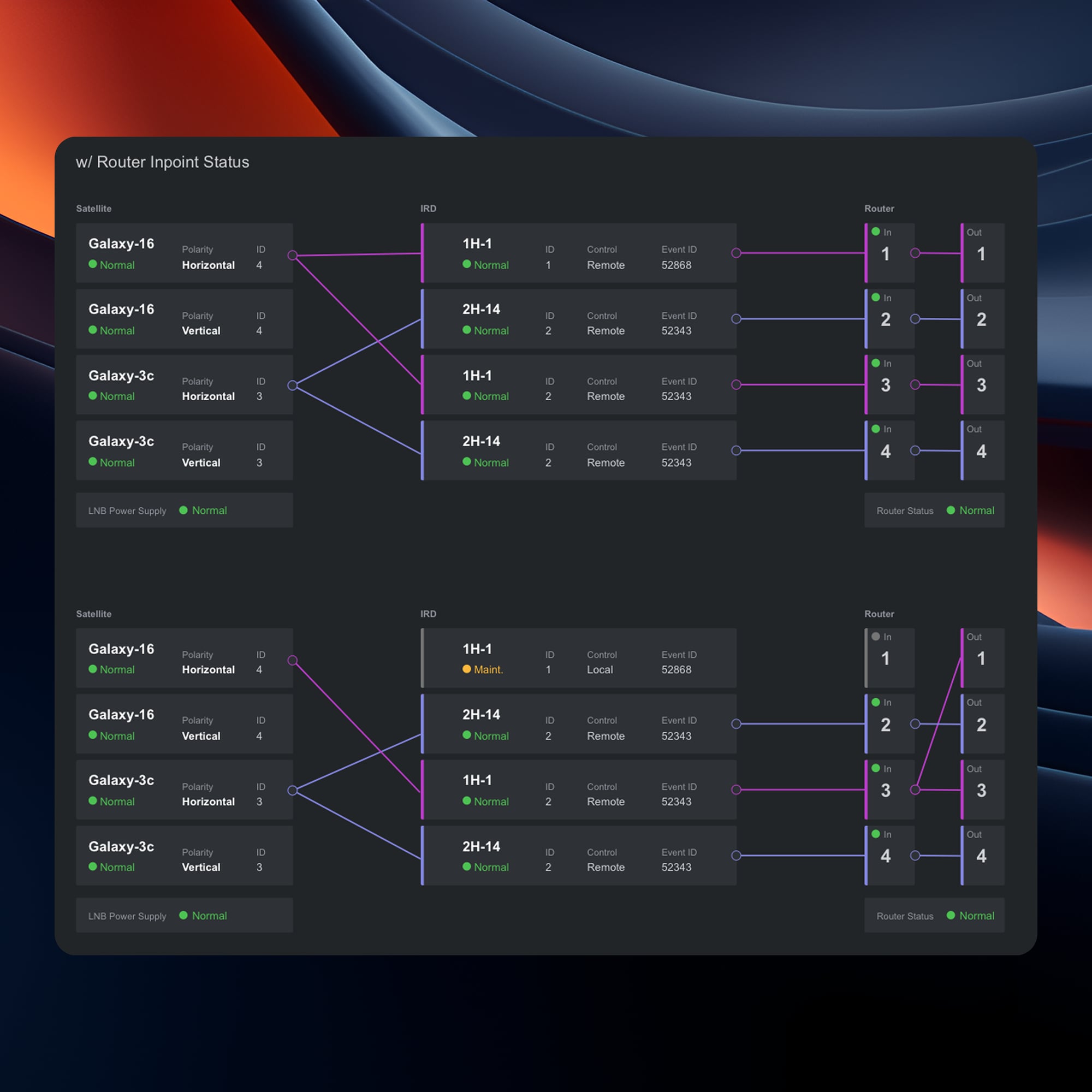
The interface was redesigned to clearly communicate what is happening now, what requires attention, and what actions are safe to take — a critical requirement in live broadcast environments.
Separate monitoring from control
Monitoring, automation, and manual control were visually and structurally distinguished to reduce the risk of accidental actions and increase operator confidence.
Design for predictability, not experimentation
The UX prioritized clarity, consistency, and feedback over novelty, ensuring trained station managers could operate quickly and safely during both routine operations and high-pressure situations.
Execution
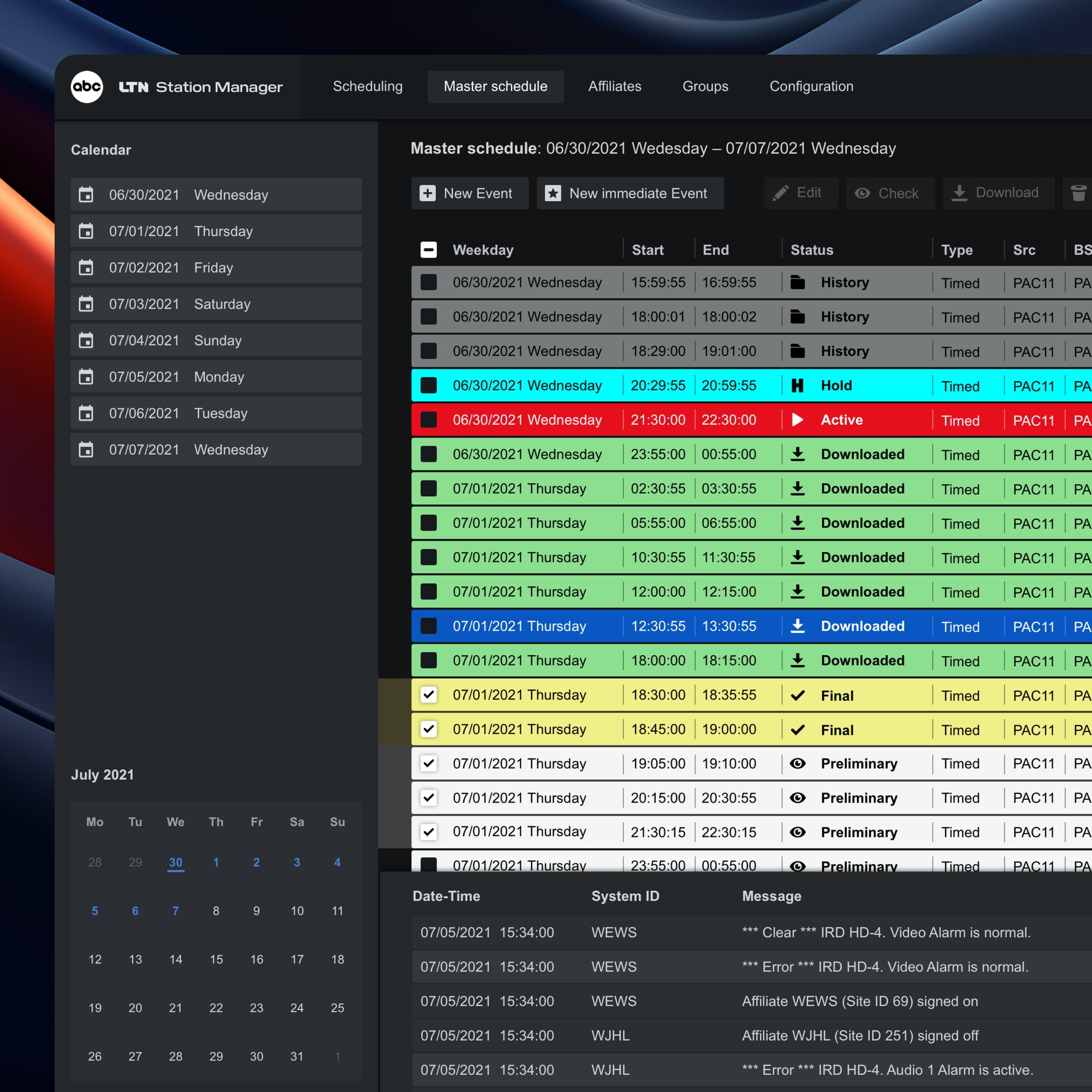
- •Redesigned the core monitoring and control interface using modern UI patterns
- •Introduced a clear information hierarchy for events, faults, and system status
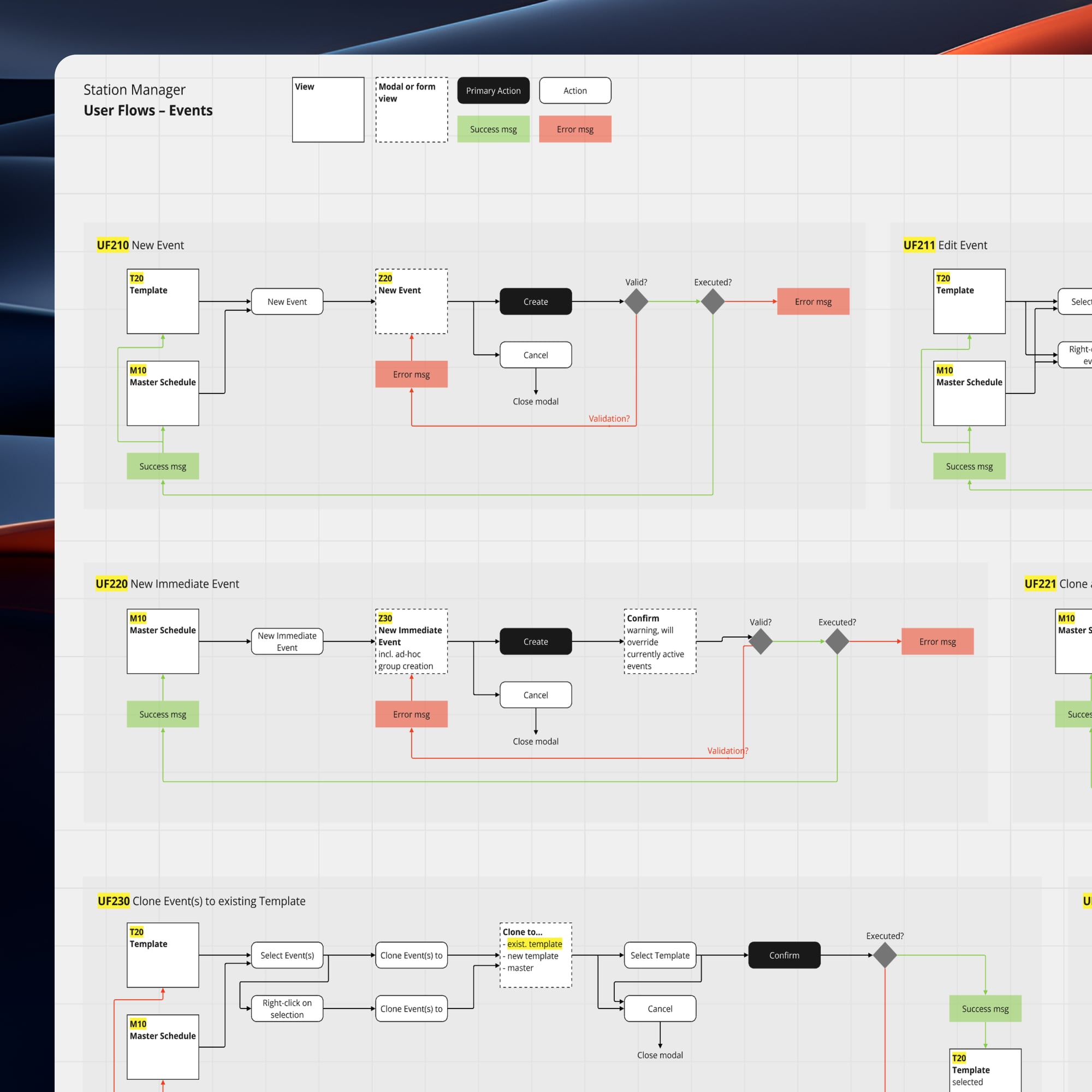
- •Consolidated legacy workflows into unified operational views
- •Improved visibility and feedback for scheduled actions and command execution
Team & Role
Team
Cross-functional product team including engineering and product stakeholders
Responsibility
Contributed to UX strategy and hands-on design execution for the Station Manager redesign, with a focus on workflow consolidation, system clarity, and operational usability.